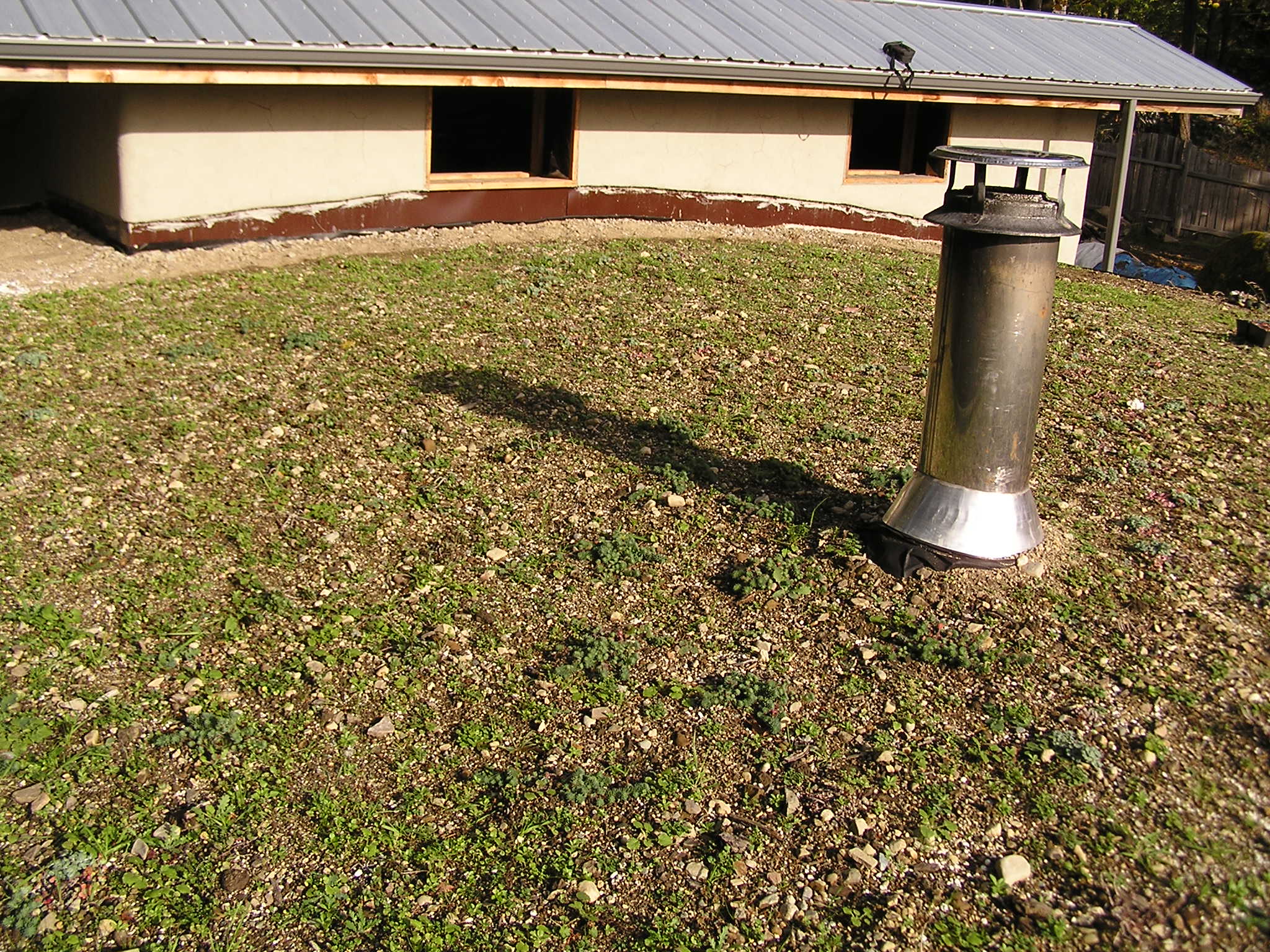
The gently curving south side of the roof was designed to be covered in a carpet of succulents. We had the size and structure of the timber frame approved by our engineer to hold the weight of six inches of soil, plus a calculated weight for snow and water. We were inspired by other green roofs we had seen, and by numerous pictures in natural building books, and by the relative easiness of the construction of layers required. We also liked the idea of our roof being an absorbing entity, making use of the sun and rain that tumbles down from the sky onto every surface area. 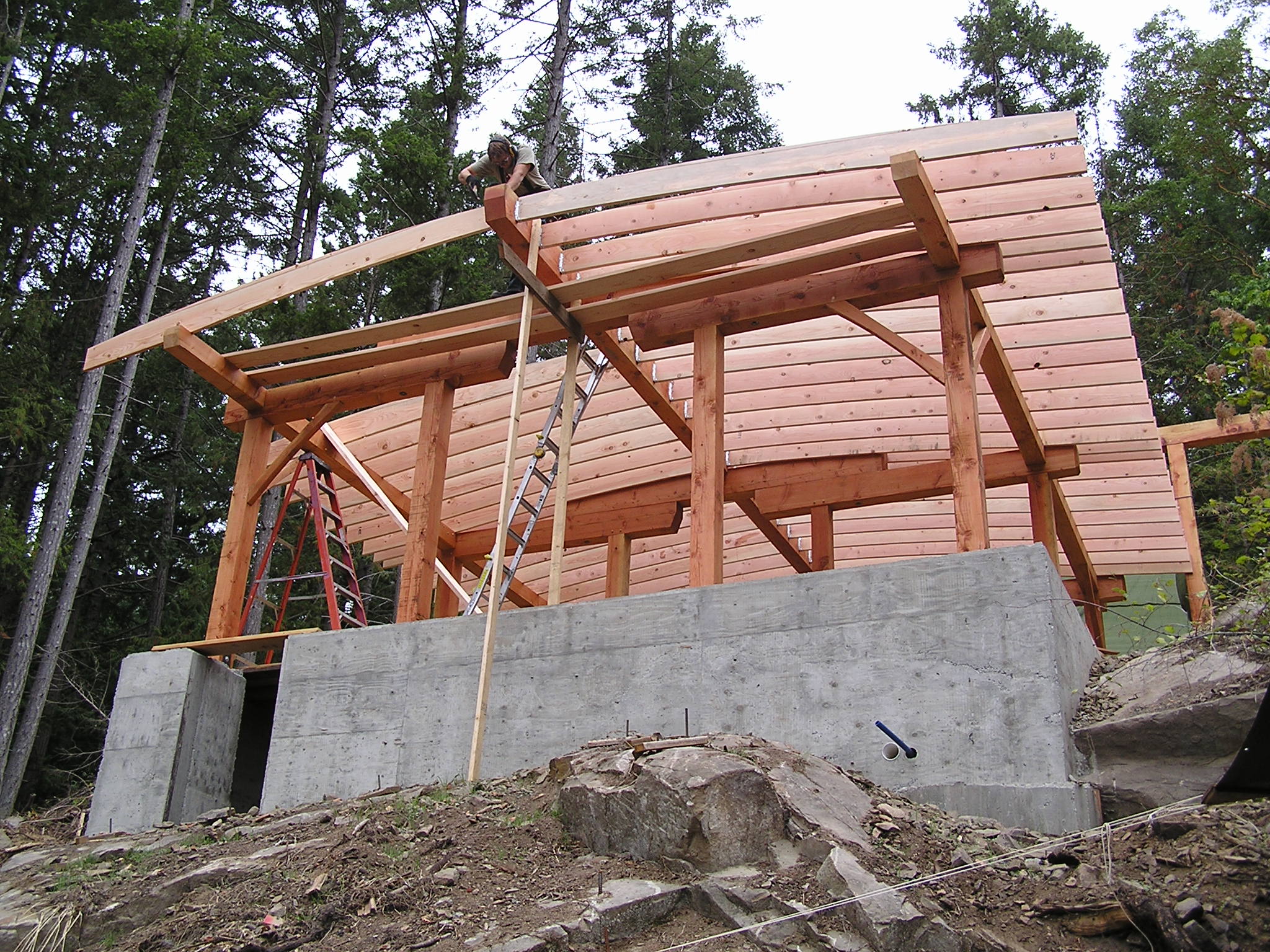 The decision to use succulents came from the idea that we wanted the coverage to be drought tolerant and spreading easily to avoid too many weeding sessions. We also saw that the rocks upon which our house was going to be built were covered already with the native stonecrop, so I lifted them in their clumps and put them aside until I could finally plant them into the soil of the roof.
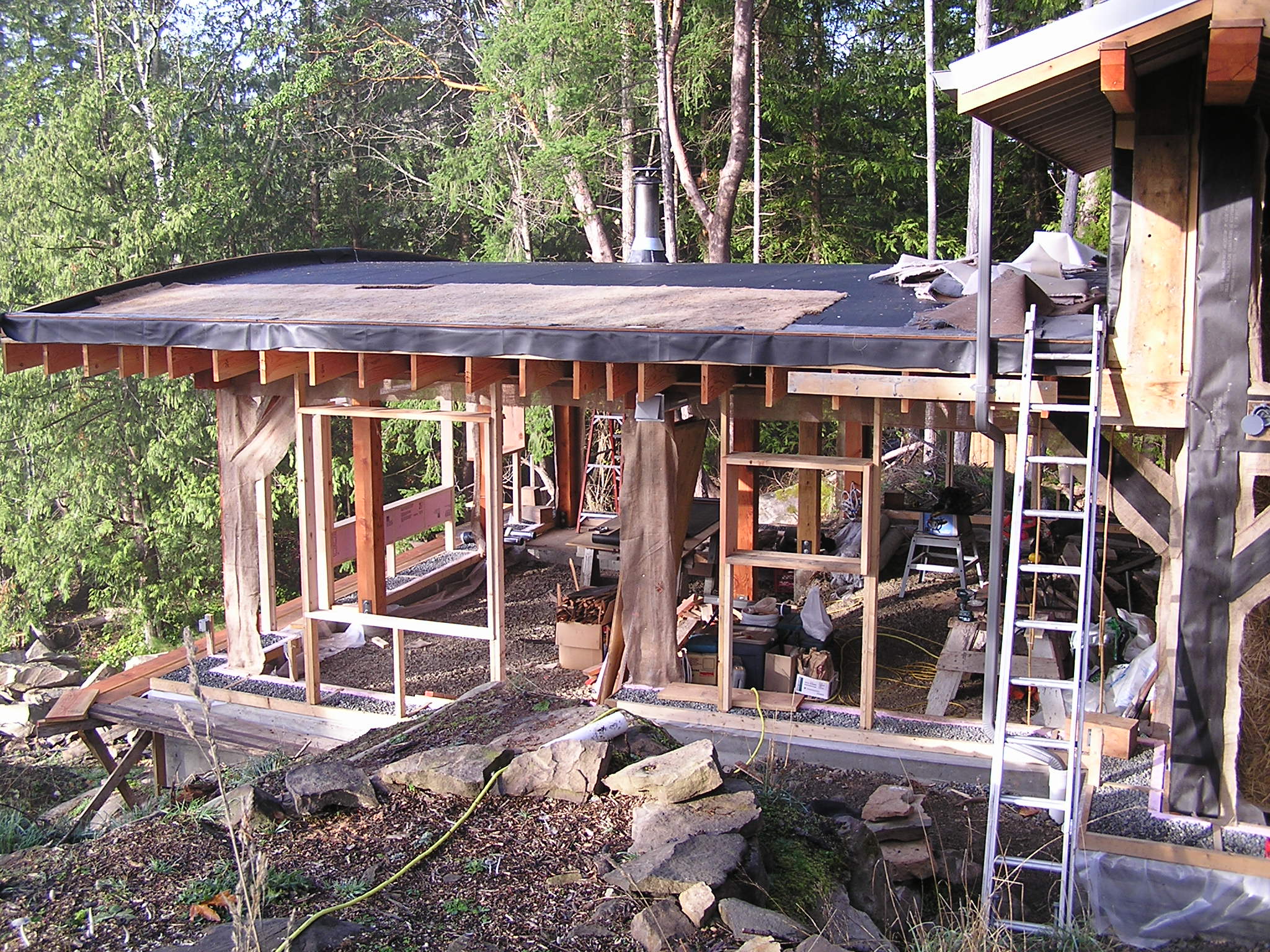 On top of the rafters, we put down plywood and building paper as in the construction of a regular roof, but on that we rolled out a rubber pond liner out to a built up lip that went all the way around the outside. Then, we put out a call for old carpets, to act as a drain mat and protector from roots wiggling down. It was important to use the kind of carpets that had a burlap or jute backing, instead of the rubber backing, as we wanted to make sure that water could drain through it and towards the edges.
  We lay down some drain rock around perforated pipes along the side lengths to allow water to collect and flow into the down spouts.
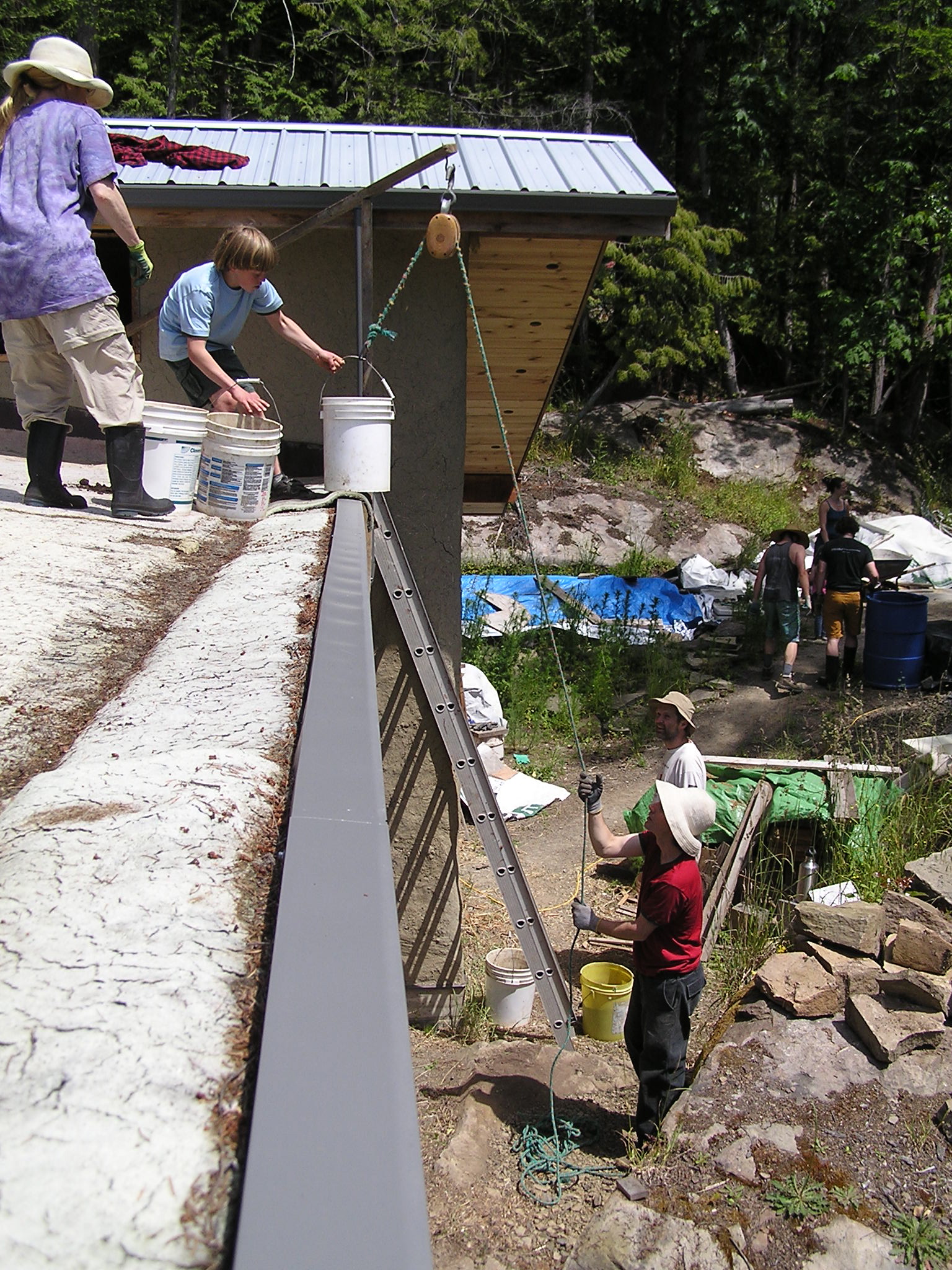
 We did a final layer of landscape cloth before we began to bring up the soil. With a pile of local pit run sand, a pile of soil that was excavated earlier when we dug out our pond, and the help of many many friends who came out for a work party on a fine June day, we managed to fill the roof with 4 inches of soil one bucket at a time.
It was a fabulous day, we had lots of enthusiastic shovellers, diggers, bucket haulers, pulley operators, dumpers, and rakers. Families came and took turns relaxing and swimming in the pond. We had lunch for everyone, and cake later on to celebrate Cedar’s 5th birthday. (Last year we had a plastering party for his birthday- imagine a bunch of kids with buckets of clay plaster and a green light for slopping it all over a bunch of bales…)
 Workparties are a definite for natural building, providing the task at hand is fairly easy to monitor. It would have taken Colin and I a month of hauling buckets up there… and we did it in one day and provided lots of community members the chance to participate in an aspect of natural building which is fun, positive, and an example of creating healthy environments. We are so glad that we have such a supportive community of people who share our values and visions of a vibrant earth, and who in turn have skills for us to learn from.
 So then we started putting the plants in, some that I had began propagating over 2 years ago. Hens and chicks, sedums, and echverias, plus all the stonecrop from the rocks that are now buried under the house. Taeven and Cedar were excited to help, and we came up with the idea to plant the stonecrop in a big infinity symbol along the center spine of the roof, with the darker green hens and chicks inside the loops, and the burgundy sedums around the outside.
  It will be interesting to see the shapes that we created with the different colours of the plants as they get established and fill out, sending their tall stalks of flowers out at various times of the year.
Right now, it is a weedy mess. It is yet another task on my list of fall jobs- weed roof. I am sure that a few weeding sessions will be needed until the seeds that were in the soil will have all sprouted, and until the carpet of succulents fills in the spaces.  So far it is functioning well, and catches my eyes softly as I move around the property. There is beginning to be lots of information out there on the construction of living roofs as well as their benefits, and I encourage anyone to try it out as a retro fit or as an option for a new building.
  One thing we did discover… there is lots of ready made, manufactured products being offered and promoted, usually at very high prices. Our research indicated that all we really need is already around us in the form of recycling! (Pond liner exempted, you really don’t want any leaks in a living roof). The creative possibilities are endless, and open to any situation.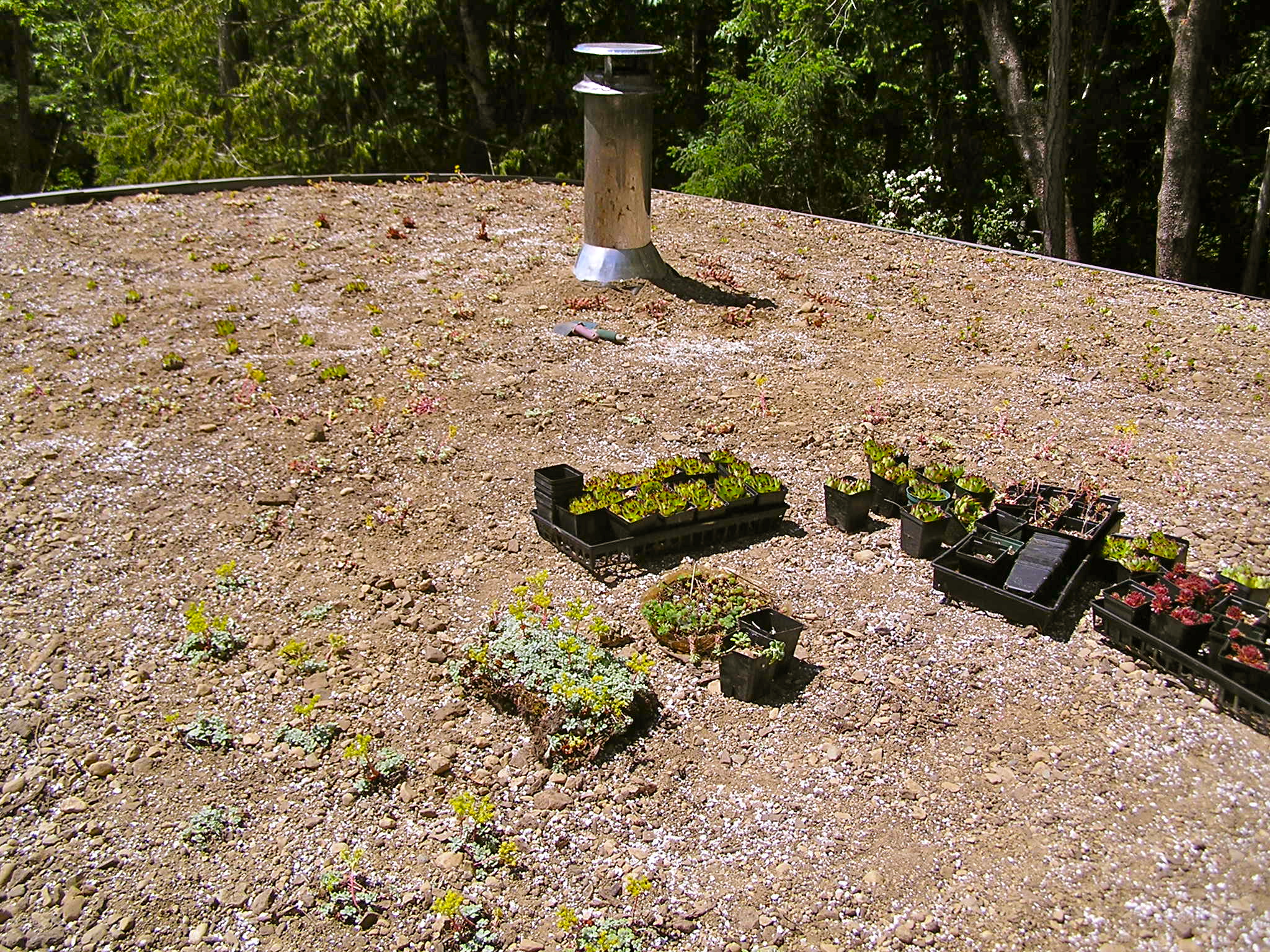






 Inspirational Village